Key Takeaways
- A Biogas Pretreatment System is essential for improving feedstock quality and digestion efficiency.
- Effective pretreatment reduces operational downtime by minimizing material-related interruptions.
- Removing contaminants like plastics and metals protects equipment and ensures smoother plant operation.
- Tailoring a biogas pretreatment system to specific waste types enhances overall project performance.
- Properly prepared organic waste leads to better gas production and consistent operational outcomes.
Power Hydrotech Private Limited is a leading provider of biogas pretreatment solutions. A biogas plant depends heavily on the quality and consistency of the material entering the digestion stage. A well-designed Biogas Pretreatment System helps remove unwanted materials, prepare organic waste properly, and create a more suitable feed for digestion.
When raw waste contains plastics, stones, metals, oversized particles, or inconsistent material, it can interfere with smooth plant operation. Pretreatment addresses these issues before the prepared biomass moves into the digestion tank, supporting better process control and equipment protection.
What Does Pretreatment Do in a Biogas Plant?
The purpose of pretreatment is to prepare incoming organic waste before anaerobic digestion. This preparation starts with controlled feeding and screening so that oversized or unwanted particles can be separated from the useful organic material.
The material can then be refined further by removing foreign and non-biodegradable elements. Metallic components are also separated because they may cause wear or damage to equipment. After cleaning, the organic material is broken into finer particles to improve its consistency and make it more accessible to microorganisms during digestion.The basic objective is simple: cleaner and better-prepared feedstock for a smoother digestion process.
Why Is It Important for Plant Efficiency?
A biogas plant does not work only on the digestion tank. The performance of upstream preparation has a direct connection with what happens inside the system.
A suitable Biogas Pretreatment System helps reduce material-related interruptions and supports a more controlled flow of feedstock. According to Power Hydrotech, its waste preparation approach is intended to improve gas production, reduce operational downtime, protect downstream systems, and improve overall project efficiency.
The major operational advantages include:
- Removal of plastics, stones, and other foreign materials
- Separation of metallic elements that may damage equipment
- More consistent particle size and feed quality
- Better preparation of organic material for digestion
- Reduced chances of disruption in downstream equipment
- Smoother overall plant operation
These benefits matter particularly for commercial and industrial plants where consistent operation is important.
How Does the Pretreatment Process Work?
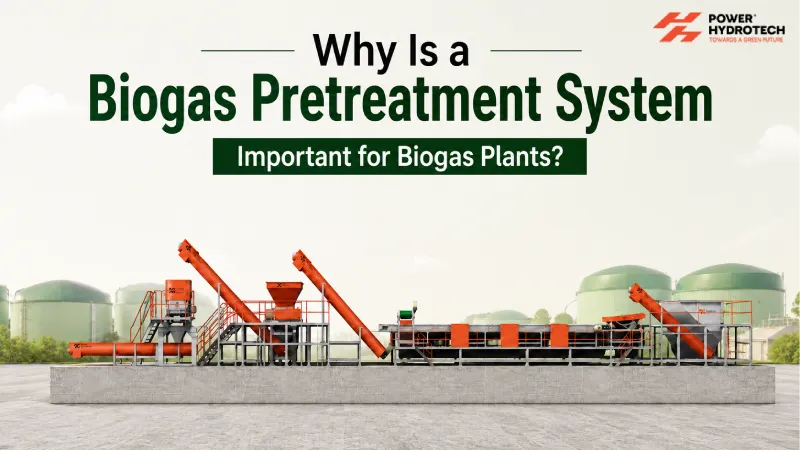
A typical waste preparation process follows a practical sequence before the material reaches the digester:
- Controlled feeding: Organic waste is introduced into the system at a steady and controlled rate.
- Initial screening: Oversized, inconsistent, and unwanted particles are filtered out.
- Foreign material separation: Plastics, stones, and other non-biodegradable materials are removed.
- Metal separation: Metallic elements are identified and taken out to reduce the risk of equipment damage.
- Particle refinement: The cleaned organic waste is broken down into finer particles.
- Transfer to digestion: The prepared biomass is sent to the digestion tank for anaerobic processing.
This sequence helps create a cleaner and more uniform feed before the main biological process begins.
What Problems Can Poor Pretreatment Cause?
Without suitable preparation, unwanted materials may move further into the plant and create operational challenges. Foreign objects can interfere with material flow, while metallic pieces can contribute to equipment wear.
Large or inconsistent particles may also make the digestion feed less uniform. In contrast, refining the waste into finer particles increases the available surface area for microbial action, which can support more effective digestion.
For plant operators, this makes pretreatment more than a simple screening step. It is an important part of preparing the feedstock for the process that follows.
What Should Buyers Consider Before Selecting a System?
The right configuration depends on the nature of the feedstock and the intended plant operation. Power Hydrotech notes that factors such as raw material composition, contamination levels, required capacity, target output quality, downstream integration, maintenance needs, and future expansion should be considered when selecting a system.
Before finalising a pretreatment solution, buyers can use this checklist:
- Check the type and composition of organic waste
- Identify the presence of plastics, stones, metals, and other contaminants
- Review the required processing capacity
- Consider the particle size needed before digestion
- Check how the system will integrate with the existing plant
- Evaluate maintenance and service requirements
- Consider whether the setup can accommodate future expansion
A system matched to the actual waste stream can provide a more practical and reliable operating arrangement.
Why Customisation Matters in Biogas Pretreatment
Not every biogas plant receives the same type of organic waste. Agricultural residues, food waste, industrial organic waste, animal manure, and other biodegradable materials can differ significantly in composition and contamination levels.
That is why system configuration should be based on the actual feedstock rather than a one-size-fits-all approach. A practical pretreatment setup should match the waste characteristics, plant capacity, and downstream requirements.
For B2B buyers, this approach can make the overall system easier to integrate with existing operations while addressing the specific challenges presented by the incoming waste.
Why Choose Us
Power Hydrotech Private Limited, provides tailor-made biogas pretreatment solutions focused on organic waste preparation before digestion. Our approach covers controlled feeding, removal of unwanted and metallic materials, particle refinement, and transfer of prepared biomass to the digestion stage. We also provide end-to-end support covering consultation, supply, installation, and AMC, with systems designed around individual biogas project requirements.
Conclusion
A biogas plant performs better when the material entering the digester has already been properly prepared. From removing plastics, stones, metals, and other unwanted materials to refining the organic feed into finer particles, pretreatment supports a cleaner and more controlled digestion process. A properly selected Biogas Pretreatment System can also help protect downstream equipment, reduce operational interruptions, and improve overall plant efficiency.For businesses planning a new biogas project or upgrading an existing facility, investing attention in feedstock preparation is a practical step toward smoother plant operation.
Looking for a suitable biogas pretreatment solution for your plant? Contact Power Hydrotech Private Limited for project-specific assistance and discuss your requirements with our team.Phone: +91 9726044442 or Email : sales@powerhydrotech.com .