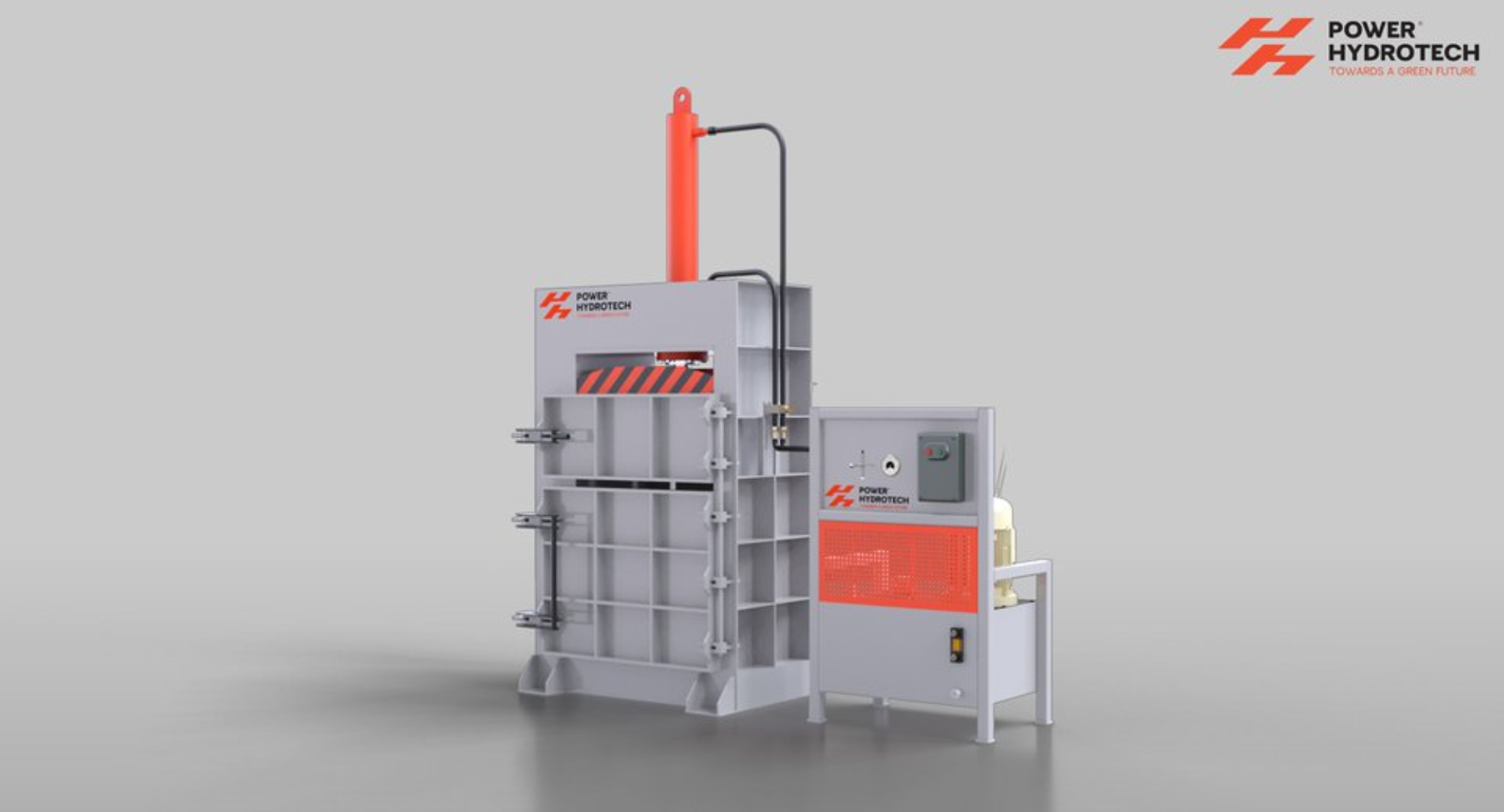
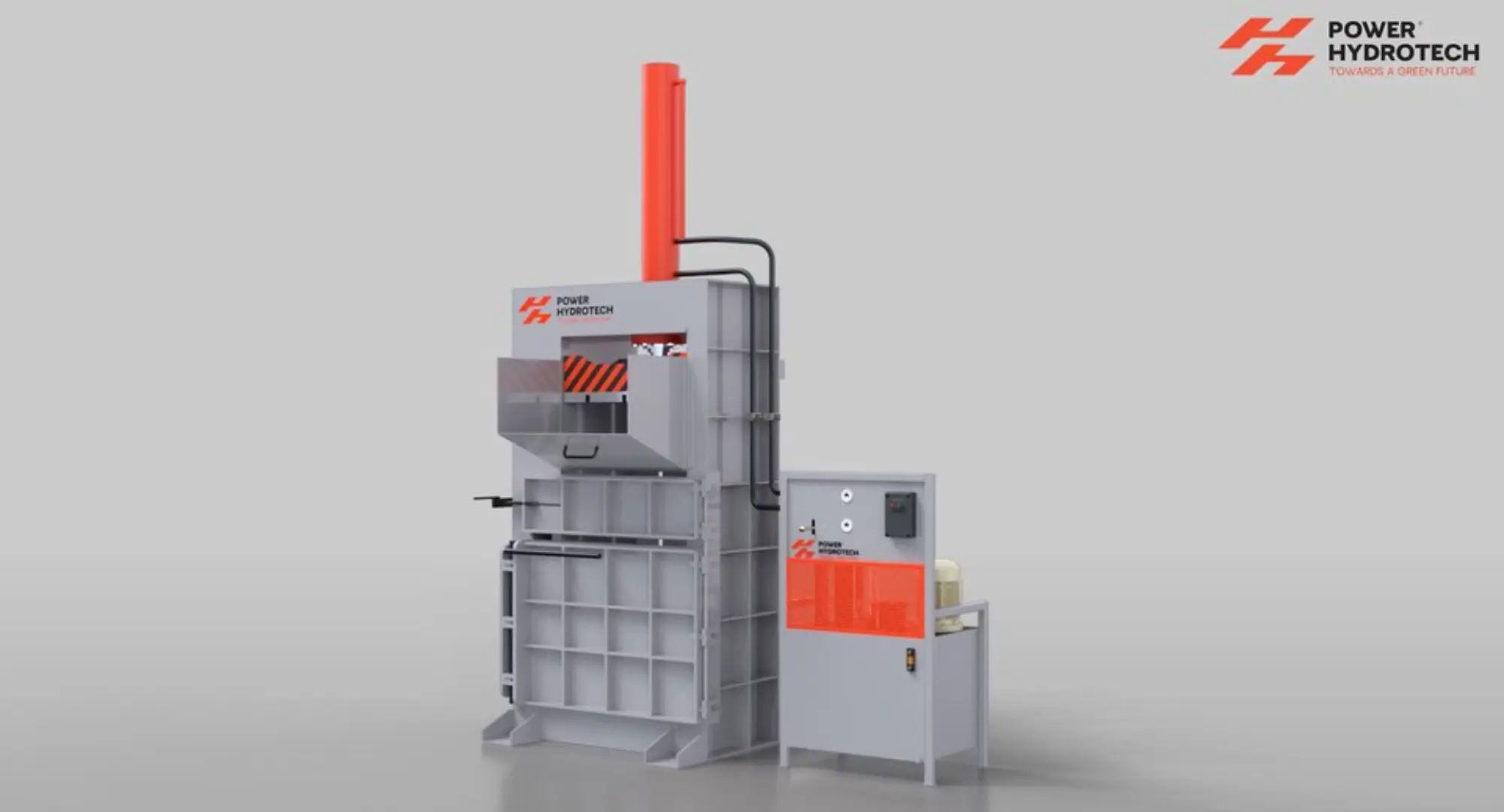
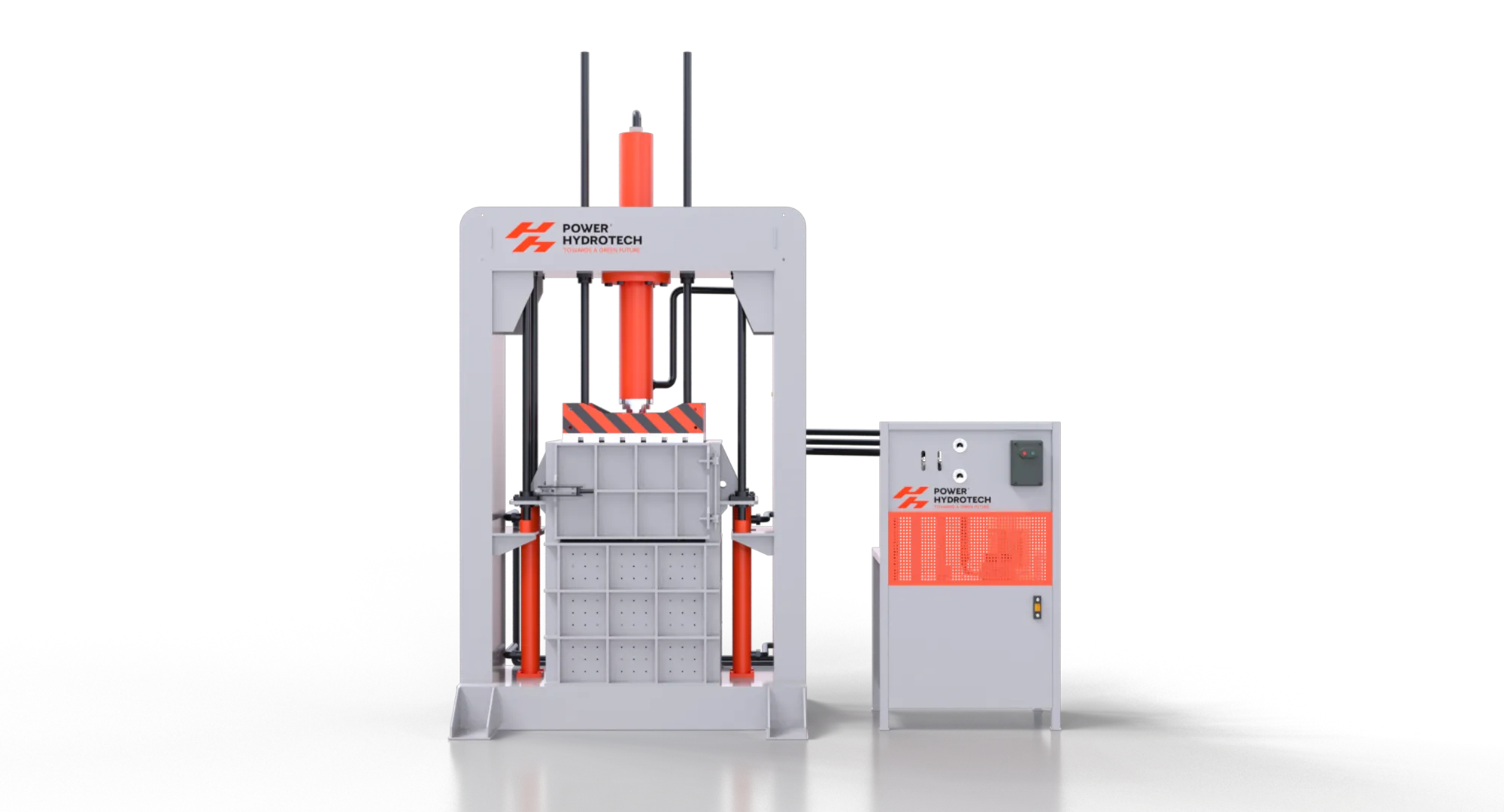
Power Hydrotech's, vertical baler machine is specially designed to transform light and loose scrap into compact, space-efficient blocks, significantly reducing storage and transportation expenses. Its compact structure and small footprint make it an ideal choice for businesses facing space constraints, as it fits seamlessly into tight areas. Equipped with a double-cylinder vertical baling press, our machine ensures high productivity and superior operational efficiency.
The vertical balers we offer are renowned for their latest technology, exceptional performance, and durability, making them a preferred choice in various industries. Each vertical baler machine is built to deliver consistent, reliable results, ensuring long-term value for our clients.
Our product lineup includes a variety of vertical baler machines designed for different types of scrap materials. These include the paper scrap baler machine, designed for compacting paper waste; the plastic scrap baler machine, suitable for compressing plastic materials; the Tyre baler machine, ideal for processing old tyres; and the textile baler machine, which effectively manages textile waste.
With Power Hydrotech's vertical balers, businesses can optimize their scrap management processes, maximize space utilization, and enhance overall productivity while benefiting from a machine that stands out for its innovative design and long-lasting performance.
A vertical baler machine uses a vertical-orientation hydraulic press to compact materials like cardboard, plastic film, paper, textiles or scrap into high-density bales. Its upright design saves floor space while the hydraulic system applies consistent force to reduce volume and improve handling.
This type of machine is suitable for compressing a wide range of materials including cardboard, paper, plastic film, PET bottles, textile scraps, and lightweight metal scrap. It’s ideal for recycling centers, manufacturing units, warehouses and retail back-rooms.
Key advantages include:
Consider these factors:
To ensure optimal performance: