Loose waste piling up in a warehouse or recycling yard eats up space fast and makes every stage of handling slower and costlier. Power Hydrotech Private Limited is a leading manufacturer of waste management machinery, and this guide explains how a hydraulic baling press solves that problem by turning bulky, loose waste into compact, easy-to-move bales.
What a Hydraulic Baling Press Actually Does
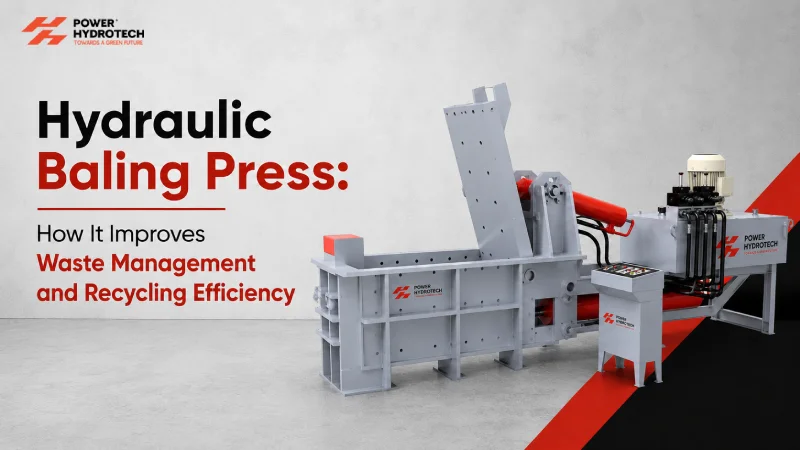
A hydraulic baling press uses powerful hydraulic force to compress loose materials such as plastic, cardboard, paper, or metal scrap into dense, uniform bales. Instead of loose waste taking up an entire storage area, compacted bales stack neatly and take up a fraction of the space. This single step changes how an entire recycling operation runs, from floor space requirements to how often transport trucks need to make a run.
The core mechanism is straightforward: material is fed into a chamber, and a hydraulic ram applies consistent pressure to compress it. Once compacted, the bale is tied off, either manually or through an automated strapping system depending on the machine's configuration, and ejected ready for storage or shipment.
Why Waste Management Operations Rely on Baling Presses
1. Reduced Storage and Transport Costs
Loose waste is mostly air. Compacting it into dense bales can shrink its footprint dramatically, which means fewer storage bins, less warehouse space, and significantly fewer transport trips to move the same volume of material. For any operation dealing with high waste volumes, this translates directly into lower logistics costs.
2. Faster, Safer Handling
Loose scrap and packaging waste are awkward and sometimes hazardous to handle manually. Bales, by contrast, are uniform in shape and size, which makes them easier to stack, load, and transport using standard equipment like forklifts. This reduces both handling time and the risk of workplace injury.
3. Better Recycling Value
Recyclers and scrap buyers generally prefer baled material because it's cleaner to weigh, sort, and process further down the line. A Hydraulic Baler Machine that produces consistent, well-formed bales often gets better handling terms from downstream buyers compared to loose or poorly compacted waste.
Matching the Machine to the Material
Different waste streams call for different baling configurations, and Power Hydrotech builds machines suited to each.
- A Hydraulic Pet Bottle Baling Press is built specifically for PET bottles and similar lightweight plastic containers, which need higher compression cycles to achieve dense, stable bales given the material's bulkiness.
- A Hydraulic Plastic Baling Machine handles a broader range of plastic waste, including films, containers, and mixed plastic scrap, adjusting compression force based on material rigidity.
- A Hydraulic Cardboard Baling Machine is designed for corrugated cardboard and paper waste, common in warehouses, retail operations, and packaging facilities generating high volumes of box waste daily.
Choosing the right configuration depends on the primary waste stream an operation generates, expected daily volume, and how much automation is needed to keep the process running smoothly with minimal manual labour.
Semi-Automatic vs Fully Automatic Options
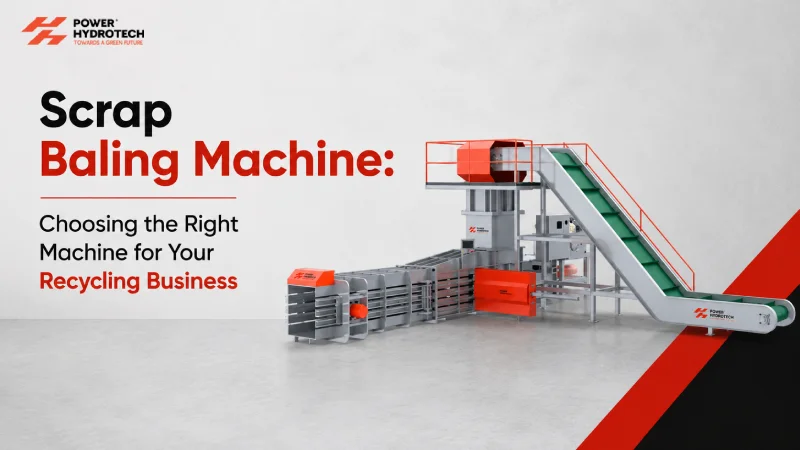
Baling presses generally come in semi-automatic and fully automatic versions. Semi-automatic machines require an operator to manage loading and tying cycles, which works well for moderate waste volumes. Fully automatic presses handle continuous feeding, compression, and strapping with minimal manual intervention, which suits high-volume operations where waste generation is constant throughout the day. Both configurations reduce labour dependency compared to manual compaction methods, just at different scales of automation.
Built for Durability and Long-Term Use
A baling press operates under constant mechanical stress, so build quality matters as much as compression power. Machines constructed with premium-grade steel and reliable hydraulic components hold up better against the repetitive cycles of daily industrial use, keeping maintenance needs lower over the machine's operating life. This durability factor becomes especially important for operations running multiple shifts, where downtime directly affects throughput.
Why Choose Us
Power Hydrotech designs and manufactures a complete range of baling solutions, including vertical, horizontal, and metal balers, built to handle everything from PET bottles and plastic film to cardboard and metal scrap. Our machines are engineered using premium materials and precision hydraulic systems that hold up to continuous industrial use while keeping maintenance requirements low. We work closely with scrap yards, recycling centres, warehouses, and manufacturing facilities to recommend the right baler configuration for their specific waste stream and daily volume, rather than offering a one-size-fits-all machine. With both semi-automatic and fully automatic models available, Power Hydrotech helps operations of every scale reduce manual labour while improving the density and market value of their baled output.
Conclusion
A hydraulic baling press turns one of the most overlooked parts of waste management, storage and transport, into a genuine efficiency gain. By compacting loose plastic, cardboard, or scrap into dense, uniform bales, operations cut down on space, labour, and transport costs while improving the recycling value of the material they process. Choosing the right baler configuration for your specific waste stream makes that efficiency gain even bigger over time.
Key Takeaways
- Hydraulic baling presses compress loose waste into dense bales, maximizing storage efficiency and reducing transport costs.
- Baled materials are easier and safer to handle, enhancing workplace safety and operational speed.
- Recyclers prefer baled waste for its uniformity, resulting in better market value and processing efficiency.
- Different baling configurations are available to suit specific waste streams, optimizing performance and reducing labor needs.
- Power Hydrotech provides durable hydraulic baling presses designed for long-term industrial use and high-volume applications.
Ready to cut storage costs and streamline your waste handling? Power Hydrotech offers a full range of hydraulic baling presses tailored to your material stream - call us at +91 9726044442 or email sales@powerhydrotech.com to get started.