Picking the wrong baling equipment for your recycling business can mean wasted floor space, slower throughput, and higher operating costs down the line. Power Hydrotech Private Limited is a leading manufacturer of waste management machinery, and this guide walks through exactly what to consider before investing in a scrap baling machine for your operation.
What a Scrap Baling Machine Does
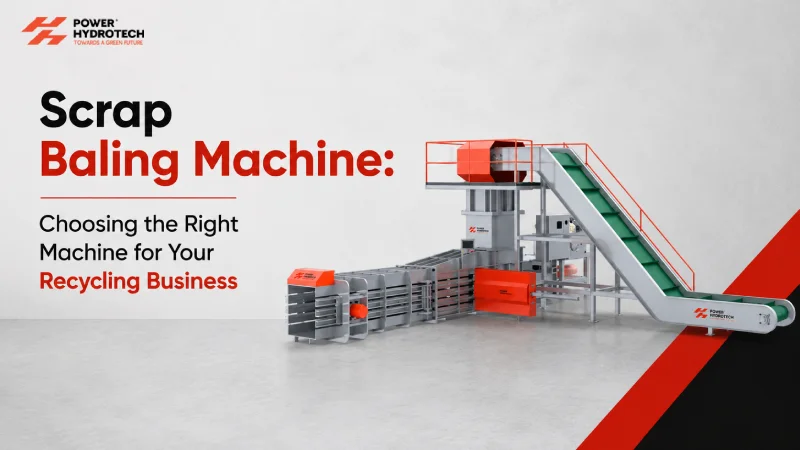
A Scrap Baling Machine compresses loose scrap metal and other recyclable materials into dense, compact bales using hydraulic force. This single process changes how a recycling business operates: instead of dealing with loose, awkwardly shaped scrap that eats up storage space and complicates transport, operations end up with uniform bales that stack efficiently and move through the supply chain far more smoothly.
For businesses handling steel, copper, aluminium, iron, zinc, stainless steel, or other alloys, baling isn't just about saving space. It directly affects how efficiently scrap can be charged into furnaces and how much material can be transported per trip, both of which have a real impact on operational cost.
Key Factors to Consider Before Choosing
1. Type of Material You Handle
Different scrap types respond differently to compaction. Light-gauge steel items behave differently under hydraulic pressure compared to bulky car parts or dense metal offcuts. Understanding your primary material stream is the starting point for choosing the right baler configuration.
2. Volume of Scrap Generated Daily
A business processing a few hundred kilograms of scrap a day has very different requirements than a large-scale rolling mill or melting unit generating several tonnes. Matching machine capacity to actual daily volume avoids both bottlenecks from an undersized machine and unnecessary cost from an oversized one.
3. Automation Level Needed
A Hydraulic Scrap Baling Press is available in semi-automatic and fully automatic configurations. Semi-automatic machines suit operations with moderate, manageable volumes where an operator can comfortably manage loading and cycling. Fully automatic presses reduce manual labour significantly and are better suited to high-volume operations running continuous shifts.
4. Desired Bale Size and Density
Downstream buyers, whether furnaces, rolling mills, or export markets, often have specific requirements for bale density and dimensions. Choosing a machine capable of consistently producing bales that meet these requirements can directly affect how favourably your scrap is priced and handled further down the chain.
5. Build Quality and Long-Term Durability
Baling machines operate under continuous mechanical stress, so the quality of materials and hydraulic components used in construction matters. Machines built with premium-grade materials tend to hold up better against the repetitive compression cycles of daily industrial use, keeping maintenance needs and downtime lower over the years.
Matching the Machine to Your Business Type
Scrap yards, rolling mills, melting units, and large manufacturing facilities generating consistent metal scrap each have slightly different needs from a Scrap Baling Machine. A scrap yard handling varied, unpredictable material streams benefits from a more flexible, adaptable configuration, while a melting unit generating a consistent scrap type can often work efficiently with a machine tuned closely to that specific material.
Why Choose Us
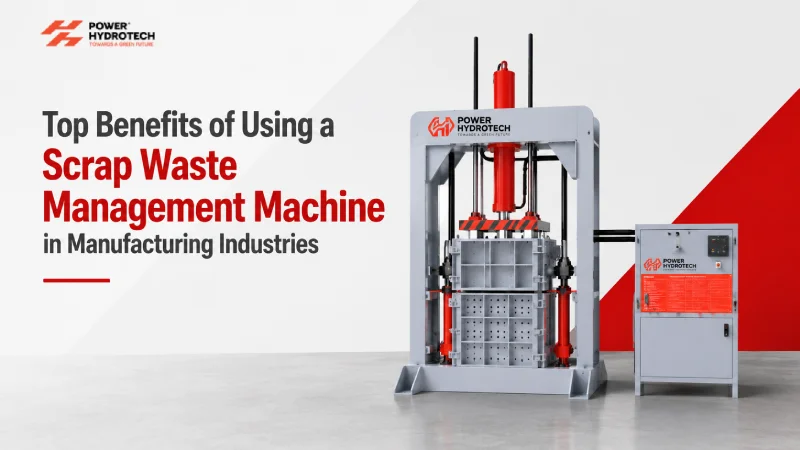
Power Hydrotech manufactures a complete range of hydraulic scrap baling presses, including vertical, horizontal, and metal baler configurations, designed to handle everything from small steel items to large, bulky metal scrap. Our machines are built using premium materials for durability and consistent performance, and we offer both semi-automatic and fully automatic options depending on an operation's volume and labour requirements. We work directly with scrap yards, rolling mills, melting units, and manufacturing facilities to recommend the configuration best suited to their specific material type and daily output, rather than a generic, one-size-fits-all solution. Our team also supports installation and ongoing servicing, helping businesses get consistent performance from their baling equipment for years.
Conclusion
Choosing the right scrap baling machine comes down to understanding your material type, daily volume, automation needs, and desired bale specifications before making a decision. Making this match correctly from the beginning lowers operational costs, decreases downtime, and frequently raises the value that downstream customers place on your baled scrap. A machine built for durability and matched carefully to your operation pays off well beyond the initial purchase.
Key Takeaways
- Understanding the type of material you handle is crucial when selecting a scrap baling machine for optimal performance.
- Consider daily scrap volume to avoid bottlenecks or unnecessary costs with your scrap baling machine.
- Choose between semi-automatic and fully automatic configurations based on your operational automation needs.
- Desired bale size and density directly impact pricing and handling of your scrap, making it essential for your baling machine.
- Investing in high-quality build materials ensures the longevity and reliability of your scrap baling machine.
Not sure which scrap baling machine fits your operation? Power Hydrotech can help you choose the right configuration for your business - call us at +91 9726044442 or email sales@powerhydrotech.com to discuss your requirements.