In today’s industrial landscape, managing urban and industrial refuse efficiently is no longer optional—it’s essential. Rising volumes of discarded materials, particularly within municipal waste recycling, demand advanced solutions. Enter the Power Hydrotech PWG Series, a high-performance municipal waste recycling machine purpose-built to transform waste streams into compact, manageable bundles ready for processing and transport. For businesses seeking a robust system from a leading municipal waste recycling machine manufacturer, this guide walks you through how the machine works, why it matters, and how it can elevate your facility’s efficiency.
Understanding the Need for Municipal Waste Recycling Machines
Urban centers, industrial parks, and commercial facilities worldwide face a common challenge: a steady influx of non-segregated materials. The label “municipal waste” encompasses everything from cardboard and paper to plastics and general solid refuse. Without proper processing tools, these materials consume space, inflate handling costs, and degrade environmental performance. That’s why the adoption of a dedicated municipal waste recycling machine in India has become a crucial business decision. What once was simply piling waste for collection now demands mechanized sorting, compacting, and processing. The PWG Series from Power Hydrotech meets that demand head-on.
What the PWG Series Brings to the Table
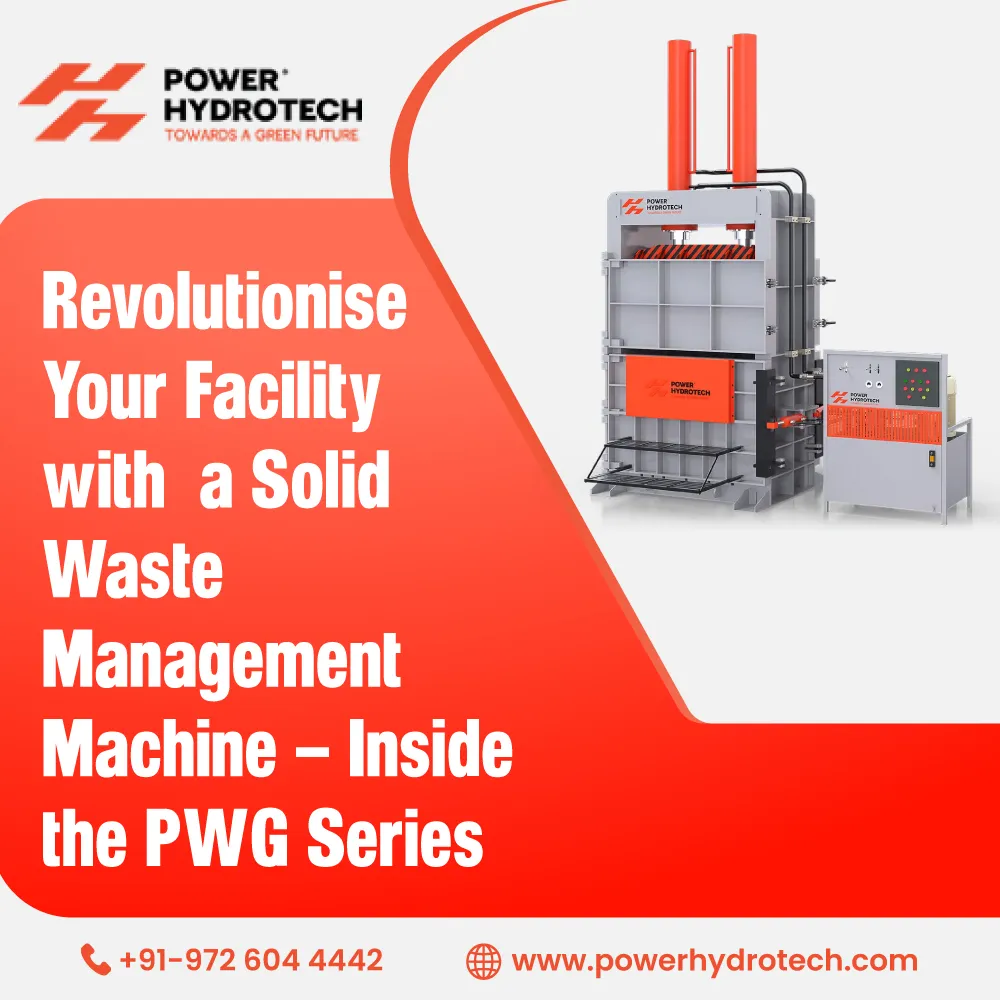
The PWG Series is engineered with a powerful hydraulic system and durable structural components to handle large volumes of solid waste. According to the manufacturer’s website, the machine supports effective sorting, compacting, and recycling of urban waste, cardboard, paper, and more. Standout features include:
- Robust Feeding Chamber: Accepts bulk waste streams, including mixed municipal refuse.
- High-Pressure Compaction: Reduces volume significantly, yielding denser bales that simplify storage and transportation.
- Advanced Control Systems: Enable safe operation even in demanding industrial environments.
- Built by Power Hydrotech: Recognized as a leader among municipal waste recycling machine manufacturers.
These features make the PWG Series a front-runner when evaluating municipal waste recycling machines.
How the PWG Series Transforms Your Waste Process
Operational efficiency is at the core of recycling systems. The PWG Series delivers in several ways:
- Feed & Sort: Waste is introduced into the system; bulky items can be segregated. The machine accommodates a range of materials typical of municipal streams.
- Compaction Phase: Hydraulic rams compress waste into compact bales, dramatically reducing volume and transport costs.
- Output & Transport: Dense bales are easier to handle and move, maximizing each shipment.
- Recycling Integration: Output is ready for downstream recycling workflows, making your facility more sustainable and cost-effective.
In short, the PWG Series becomes a vital link in your recycling chain and underscores how choosing a high-quality municipal waste recycling machine manufacturer can make a tangible difference.
Benefits of Installing the PWG Series
- Reduced Handling & Transport Costs: Denser bales mean fewer trips and lower volume.
- Space Optimization: Reclaim storage and processing area by compacting waste effectively.
- Improved Sustainability Credentials: Demonstrates environmental commitment to stakeholders.
- Streamlined Operations: Integrates into existing workflows with minimal disruption, accelerating the move from waste accumulation to value extraction.
Implementation Best Practices
To gain maximum benefit from the PWG Series:
- Ensure Consistent Feedstock: A mixed but predictable input stream maximizes bale density.
- Perform Scheduled Maintenance: Protect uptime by defining service intervals with your manufacturer.
- Train Operators: Proper training safeguards safety and productivity.
- Monitor KPIs: Track bale weight, compaction ratio, and downtime to refine operations.
Why Choose Power Hydrotech
At Power Hydrotech, we specialize in advanced recycling and baling solutions tailored to your facility’s demands. We deliver machines that perform reliably, integrate seamlessly, and drive transformation in waste processing. When you partner with us, you select a manufacturer recognized for innovation, quality engineering, and customer success. Our team collaborates with you to optimize waste flow, reduce costs, and build a more sustainable operation. With deep expertise in municipal waste recycling machines, we bring trust every step of the way.
Conclusion
By integrating the PWG Series into your facility, you step into a new era of waste management where volumes shrink, costs fall, and sustainability rises. From sorting through dense compaction to efficient transport of bales, this machine reflects what modern, high-performance recycling systems make possible. Choosing Power Hydrotech ensures you access not just a municipal waste recycling machine, but a comprehensive solution engineered to maximize throughput and environmental impact. If you are ready to transform your facility’s handling of waste with proven technology, this opportunity stands waiting.
For more information about the PWG Series and to discuss how it can serve your operation, call +91 9726044442 or email sales@powerhydrotech.com.
FAQs
What types of waste can the PWG Series handle?
The PWG Series processes municipal waste streams—including cardboard, paper, mixed municipal refuse, and other common urban or industrial materials.
How does compaction improve transport efficiency?
By compressing waste into dense bales, the PWG Series reduces volume significantly, meaning fewer containers, less transport trips, and better space usage.
What makes Power Hydrotech a reliable manufacturer?
Power Hydrotech is a leading manufacturer/exporter of baling and recycling machines, with proven expertise in municipal waste recycling machinery and strong after-sales support.
Can existing facilities integrate the PWG Series?
Yes—engineered for integration, the PWG Series can be added to existing facilities with minimal workflow disruption when paired with proper site preparation and operator training.
How should maintenance be managed?
Regular maintenance includes hydraulic inspection, ram-pressure monitoring, control-system checks, and preventive service scheduling with your manufacturer to maximize uptime and bale quality.