Key Takeaways
- Prioritize high compression force and cylinder quality for dense, uniform bales.
- Choose PLC controls and automation for faster and safer operations.
- Look for energy-efficient pumps and coolers to reduce running costs.
- Demand robust safety interlocks and compliance features for worker protection.
- Select modular, durable builds from trusted manufacturers like Power Hydrotech Private Limited.
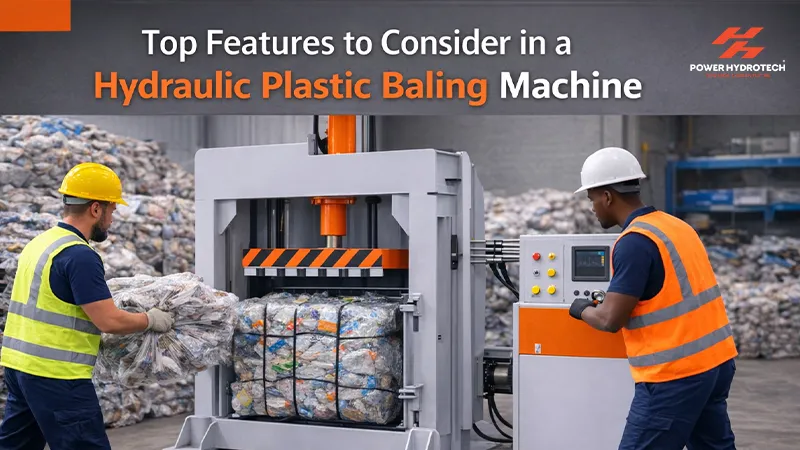
Selecting the right hydraulic plastic baling machine marks a critical decision for recycling operations handling PET bottles, films, packaging, and industrial scrap. These machines compress bulky plastic waste into dense, manageable bales that cut storage needs and transport costs while streamlining recycling workflows. Business owners and engineers in waste management prioritize features that deliver consistent performance across diverse plastic types without frequent interruptions.
Pressing Power and Cylinder Design
A robust hydraulic system forms the core of any hydraulic plastic baling machine. High compression force, often ranging from 20 to 100 tons depending on the model, crushes even resilient plastics like HDPE and PET into tight bales. Power Hydrotech Private Limited builds their hydraulic plastic baling machine series with double-cylinder setups that apply uniform pressure, avoiding weak spots in bales that could loosen during handling.
Cylinder quality matters for longevity. Thick-walled, honed cylinders resist scoring from contaminants common in plastic scrap. Seals made from durable polyurethane withstand the heat and pressure cycles, maintaining peak force over thousands of operations. Operators notice the difference when bales eject cleanly without sticking, a direct result of superior hydraulic design in a hydraulic plastic baling machine.
Models like the PWH Series from Power Hydrotech Private Limited scale force for heavy-duty tasks, processing large volumes of film or bottles hourly. This adaptability keeps production lines moving, turning loose waste into revenue-ready bales efficiently.
Chamber Size and Bale Dimensions
Chamber capacity dictates daily throughput in a hydraulic plastic baling machine. Larger chambers, such as 1.5m x 1m x 2m, swallow substantial loads of plastic film or containers before pressing, ideal for high-volume facilities. Adjustable bale sizes, typically 700mm x 1100mm x variable lengths up to 1200mm, match truck payloads or customer specs, optimizing logistics.
Power Hydrotech Private Limited’s PWS Series suits smaller operations with compact chambers that still yield standard 300-500kg bales. Door mechanisms, whether manual or automatic, seal tightly to contain expansion during compression. Engineers value quick chamber emptying via side ejectors, which speeds cycles and reduces labour compared to front-loading designs.
Consistent bale shape relies on rigid chamber walls reinforced against flex. Welded steel plates over 10mm thick hold form under max pressure, producing uniform bales that stack securely. This feature in a hydraulic plastic baling machine minimizes reworks and appeals to buyers focused on downstream efficiency.
Control Systems and Automation Levels
Modern hydraulic plastic baling machine units integrate PLC touchscreens for intuitive operation. Operators select pre-set programs for PET, film, or mixed plastics, automatically adjusting pressure and dwell times. Touch interfaces display real-time diagnostics like cycle counts, pressure readings, and fault codes, cutting troubleshooting time.
Semi-automatic models in Power Hydrotech Private Limited’s lineup require manual feed but automate pressing and ejection. Fully automatic variants with conveyors handle continuous feeds, boosting output to 20-50 bales per hour. Safety interlocks halt operations if doors ajar or sensors detect anomalies, protecting workers around busy plants.
Remote monitoring via apps tracks performance metrics, alerting to oil temps or low pressure. Such connectivity in a hydraulic plastic baling machine lets managers optimize from afar, vital for multi-site recyclers.
Hydraulic System Durability and Efficiency
Premium hydraulic pumps and valves drive reliable cycles in a hydraulic plastic baling machine. Variable displacement pumps adjust flow to demand, saving energy during lighter loads like thin films. Coolers maintain oil below 60°C, preventing viscosity loss that hampers performance in warm climates.
Power Hydrotech Private Limited equips their hydraulic plastic baling machine with oversized reservoirs holding 800-1500 litters, allowing debris to settle before filtering. Multi-stage filters capture particles down to 10 microns, shielding pumps from wear. Accumulators smooth pressure spikes, extending valve life.
Leak-proof fittings and hoses rated for 300 bar burst pressure resist failures common in cheaper units. These components keep a hydraulic plastic baling machine producing day after day with minimal fluid top-ups.
Material Handling and Feeding Mechanisms
Efficient feeds set top hydraulic plastic baling machine models apart. Hopper designs with angled walls guide bulky plastics without bridging, where material hangs up. Cyclone separators pre-shred films, packing more into each cycle for higher density bales.
Power Hydrotech Private Limited’s PWC Series offers customizable hoppers for odd-shaped scrap. Powered conveyors or air systems deliver waste automatically, freeing operators for monitoring. Pre-press rams fluff and pre-compress, eliminating voids for 1200kg/m³ densities.
Anti-jam shear knives slice protruding edges, preventing stalls. These aids in a hydraulic plastic baling machine handle diverse inputs from bottles to strapping, maintaining uptime.
Safety Features and Compliance Standards
Safety integrates seamlessly into quality hydraulic plastic baling machine builds. CE-marked guards enclose moving parts, with magnetic sensors stopping motion if breached. Two-hand controls for manual cycles prevent accidental presses, while emergency stops cut power instantly.
Light curtains around feeds detect intrusions, halting rams’ mid-stroke. Power Hydrotech Private Limited prioritizes these in their hydraulic plastic baling machine, meeting ISO 13849 standards for performance levels. Overload protection valves vent excess pressure, averting frame damage.
Low noise cabinets under 75dB suit urban sites, and spill trays catch leaks. Compliance badges and operator manuals detail lockout procedures, giving buyers peace of mind.
Energy Efficiency and Operating Costs
Top hydraulic plastic baling machine units sip power, often under 30kW for mid-range models. Regenerative valves recapture energy on bale ejection, slashing bills by 20%. Variable frequency drives on motors match speed to load, idling efficiently during ties.
Power Hydrotech Private Limited designs their hydraulic plastic baling machine for low idle draw, crucial for 24/7 plants. Heat exchangers recycle warmth, and LED indicators cut auxiliary power. Long-term, these save thousands annually versus power-hungry competitors.
Durability and Build Quality
Heavy-duty frames from high-tensile steel withstand years of cycles. Manganese wear plates line chambers, replaceable when grooved. Power Hydrotech Private Limited’s hydraulic plastic baling machine uses AR plates for rams, resisting abrasion from gritty plastics.
Modular designs allow part swaps without full teardowns. Powder-coated finishes fight corrosion in humid recyclers. Galvanized components extend life in coastal areas.
Ease of Maintenance and Serviceability
Accessible panels speed inspections on a hydraulic plastic baling machine. Side doors expose valves and filters without tools. Quick-change rams slide out for seal work, minimizing downtime.
Power Hydrotech Private Limited includes diagnostic ports for pressure tests. Self-draining sumps simplify oil changes. Spares commonality across series cuts inventory needs.
Scalability and Customization Options
Modular hydraulic plastic baling machine platforms grow with needs. Add conveyors or auto-tiers later. Power Hydrotech Private Limited tailors PWC Series for unique plastics, like foamed PS.
Why Choose Us
Power Hydrotech Private Limited excels in hydraulic plastic baling machine solutions because our PWS, PWH, and PWC series deliver tailored compression for PET, films, and industrial scrap, fitting small units to large facilities with minimal maintenance. Built with advanced hydraulics and durable materials, our machines produce dense bales that slash handling costs and support sustainability goals. Clients rely on our innovation for reliable, cost-effective performance that adapts to their exact recycling demands.
Conclusion
Key features like powerful cylinders, smart controls, and robust safety define a superior hydraulic plastic baling machine. From efficient feeds to durable builds, these elements drive high output and low costs for plastic recyclers. Investing wisely pays dividends in smoother operations and greener practices.
Ready to upgrade your plastic waste handling? For details on top hydraulic plastic baling machine features, call Power Hydrotech Private Limited at +91 9726044442 or email sales@powerhydrotech.com. Let’s optimize your setup today.
FAQs
What compression force suits most hydraulic plastic baling machine needs?
20-100 tons handle PET and films well. Scale to volume for best results.
How do PLC controls benefit a hydraulic plastic baling machine?
They automate cycles, diagnose issues, and optimize for plastic types quickly.
Why focus on hydraulic system features in a hydraulic plastic baling machine?
Durable pumps and filters maintain pressure, preventing downtime and weak bales.
What safety standards should a hydraulic plastic baling machine meet?
CE marking, interlocks, and emergency stops protect operators effectively.
Can hydraulic plastic baling machine models scale for growth?
Yes, modular designs add conveyors or tiers as your recycling expands.