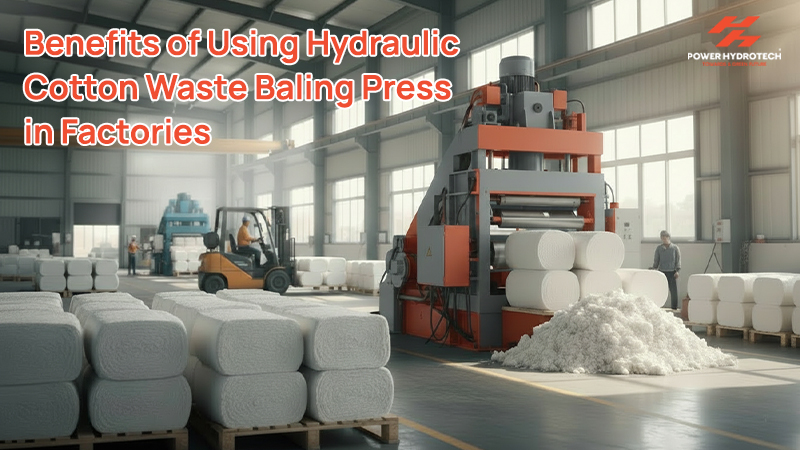
Cotton waste is one of those factory problems that looks small in the morning… and becomes a full-blown headache by evening. Loose cotton scraps, trimming waste, lint, fabric leftovers, rejected rolls, and packing-related textile waste keep piling up. It spreads fast. It takes space. It blocks walkways. And it quietly increases labour time, cleaning cost, and dispatch cost. Most factories don’t lose money because cotton waste exists. They lose money because cotton waste is handled in an unstructured way. That’s where a Hydraulic Cotton Waste Baling Press becomes the smartest waste management decision for textile factories, garment units, spinning mills, and industrial processing plants. It compresses loose cotton waste into tight, manageable bales, so your facility stays cleaner, your storage becomes predictable, and your waste movement becomes efficient.
The Real Challenge: Loose Cotton Waste in Industrial Facilities
Cotton waste isn’t heavy. Not at all. But it is bulky, fluffy, and honestly… hard to control when it’s stored loosely. That’s the real problem. Even a small amount can take up a surprisingly huge area. And when production is running non-stop, the waste keeps building up every hour. No break.
Most factories try to manage it using sacks, bins, cages, or just an open corner. Sounds fine in theory. But it usually turns into the same cycle repeatedly: the waste spills out, workers keep shifting it around, housekeeping becomes a daily repeat task, and the storage area ends up messy all over again. And over time, that waste zone starts getting in the way of actual operations. It eats up usable floor space and creates an unsafe setup for movement, machine access, and day-to-day working inside the facility.
Another issue is that loose cotton waste is difficult to transport. It fills vehicles quickly without adding real weight, which means factories end up paying for more trips, more loading time, and more labour involvement. This is not efficient waste management. It’s cost leakage. A Hydraulic Cotton Waste Baling Press stops this problem at the source by compressing cotton waste into dense bales that are easy to stack, store, and dispatch.
Why Factories Prefer Hydraulic Baling Over Manual Waste Handling
Manual cotton waste handling is slow. It depends on labour availability. It causes inconsistency. And it never really solves the problem; it only shifts it from one corner to another. Cotton waste stored loosely keeps expanding, and the facility keeps losing space. With a Hydraulic Cotton Waste Baling Press, the factory gains a fixed waste output format: the bale. Once you have bales, you can plan storage, plan dispatch, and keep the facility clean.
Hydraulic baling also reduces daily waste chaos. Instead of constant waste movement, workers handle waste in a more controlled way. It improves productivity indirectly because production staff are not distracted by waste overflow, and housekeeping becomes faster and easier.
Major Space Saving in Factory Premises
Space is money in a factory. It’s that simple. Loose cotton waste consumes space far beyond what most managers expect, especially in spinning mills and garment units where waste is continuous. A Hydraulic Cotton Waste Baling Press compresses the cotton waste into compact bales that can be stacked vertically. This instantly frees up floor space that can be used for raw material storage, finished goods, movement lanes, or safer working zones.
This is one of the biggest reasons factories invest in balers. Because space recovery is immediate. You don’t have to wait months to see the impact. The improvement shows up in the first week.
Faster Waste Handling and Improved Labor Efficiency
Cotton waste handling consumes manpower. Workers collect it, pack it, shift it, re-pack it, and keep managing overflow. That time adds up. It affects housekeeping. It affects productivity. It affects staff fatigue. With a Hydraulic Cotton Waste Baling Press, cotton waste handling becomes a scheduled task instead of a continuous problem.
The waste collection becomes simpler: gather waste, load it, press it, tie it, store it. This structured flow reduces unnecessary movement and improves overall labour efficiency. It also reduces workplace frustration because waste no longer feels like a never-ending mess.
Cleaner Factory Environment and Improved Housekeeping
Factories that deal with cotton waste know this problem too well. It starts small. A little fluff near the machine. Then more fibres. Then suddenly, cotton is everywhere stuck in corners, clinging to surfaces, even floating around like it owns the place. And honestly, it makes the whole waste area look messy. Not just messy. Unprofessional.
Over time, this hits harder than people expect. Client visits feel awkward. Internal audits get stricter. Even your own staff starts treating the waste zone like a “leave it there” space. That’s when things slip. A Hydraulic Cotton Waste Baling Press fixes this in a very practical way. It takes all that scattered cotton waste and compresses it into neat, solid bales. Clean blocks. Easy to handle. Easy to stack.
Once the cotton waste is baled, it stays contained. No spilling. No spreading. No fibres blowing across the floor every time a fan turns on. Storage becomes simple, and the waste zone stops looking like a dumping area. Small change. Big difference. And the site instantly looks more disciplined.
Improved Safety and Reduced Fire Risk Exposure
Cotton waste is a known safety concern in textile environments. Loose cotton scraps and Fibers can create hazards, especially when stored in open piles. The surface area is large, and it can become a risk in environments where machines generate heat or dust accumulation occurs. A Hydraulic Cotton Waste Baling Press helps reduce this exposure by compressing cotton waste into bales that are easier to store in a controlled manner.
Baled waste also reduces walkway blockage. It reduces scattered waste. It reduces the chances of slips, trips, and operational obstruction. This is not a small benefit. In industrial facilities, safety improvements protect people and reduce operational interruptions.
Lower Transport Cost and Smarter Dispatch Planning
Transport is one of the most underestimated costs in waste management. Loose cotton waste fills trucks quickly, which forces factories into more frequent dispatch cycles. More trips mean more fuel, more time, more loading labour, and more coordination. A Hydraulic Cotton Waste Baling Press solves this by creating dense bales that allow better vehicle utilization.
When cotton waste is baled, a truck can carry more material in one trip. Loading becomes faster. Unloading becomes easier. Dispatch becomes more predictable. This directly improves waste logistics and reduces unnecessary operational spending.
Easier Recycling Handling and Higher Waste Value
Cotton waste is recyclable, but loose cotton waste is not convenient for recycling partners. It is difficult to handle, store, and transport. Recycling buyers and waste processors often prefer baled waste because it is standardized and easier to manage. A Hydraulic Cotton Waste Baling Press produces uniform bales that simplify recycling workflows.
This does not mean exaggerated claims like “double your profit.” No. But it does mean that baled cotton waste is treated more professionally in the waste supply chain. It becomes easier to sell, easier to store, and easier to move. That alone improves waste management efficiency.
How a Hydraulic Cotton Waste Baling Press Works in Real Factory Operations
The process is straightforward and fits well into daily factory routines. Cotton waste is collected from production zones and brought to the baler area. The waste is loaded into the chamber. The hydraulic ram compresses the waste in stages. Once the bale reaches the required density, it is tied with strapping. The bale is then ejected and moved to storage.
This workflow turns a messy waste stream into a structured output. And because the process is repeatable, factories can standardize waste handling without depending heavily on manual sorting or constant shifting.
What to Look for When Buying a Cotton Waste Baler
Not all balers are built for continuous industrial use. A factory should look for a machine that supports stable operation, long-term durability, and safe handling. The structure should be strong enough to handle repetitive pressing cycles. The hydraulic system should be stable and designed for consistent performance. The machine should produce bales that hold shape and stack properly.
Service support is also critical. A baler is a long-term machine. Downtime creates waste overflow. That’s why choosing a reliable manufacturer matter. This is where Power Hydrotech Private Limited becomes a strong choice for industrial buyers who want a baler that performs reliably in real factory conditions.
Why Power Hydrotech Private Limited Is Trusted for Baling Machines
A baling press is not a short-term purchase. It is a machine that becomes part of your daily waste management workflow. That means your manufacturer should understand industrial realities: continuous waste generation, daily pressing cycles, operator handling, and maintenance requirements. Power Hydrotech Private Limited is known for manufacturing baler machines with a focus on durable construction, stable hydraulic performance, and practical usability.
Factories choose Power Hydrotech Private Limited because the machines are designed for consistent output and long-term operation. The balers are built for real working environments where performance must stay stable. And that matters because in factories, a baler is not used occasionally. It is used regularly. With a strong industrial approach, Power Hydrotech Private Limited supports cotton waste management with machines that help factories stay cleaner, safer, and more organized.
Why Choose Us
Choosing the right manufacturer for a cotton waste baler is not only about getting a machine. It’s about getting a reliable waste management solution that stays consistent in daily factory use. Power Hydrotech Private Limited focuses on manufacturing durable and performance-driven baling presses designed for industrial operations where cotton waste generation is continuous. With strong build quality, stable hydraulic systems, and practical machine design, Power Hydrotech Private Limited supports factories in reducing space usage, improving housekeeping, and streamlining cotton waste dispatch. When factories choose Power Hydrotech Private Limited, they choose a long-term baling solution that improves operations without adding complexity.
Conclusion
Cotton waste is unavoidable in textile and garment factories. It’s part of the job. But loose cotton waste? That part is avoidable. And that’s where the real difference begins. A Hydraulic Cotton Waste Baling Press helps factories take scattered cotton scraps and turn them into compact, tight bales. Neat blocks. Easy to store. Safer to handle. And way more efficient to transport. No cotton flying around. No waste piles looking like a disaster zone.
It also improves space utilization—because loose cotton eats space like crazy. Labour waste goes down too, since workers aren’t spending half the shift just collecting and re-collecting fluff. Housekeeping becomes cleaner. More disciplined. And waste dispatch planning becomes easier, because you’re moving proper bales, not random bags and loose bundles.
For factories that want a structured, reliable cotton waste management process, investing in a good baler is a smart, practical step. Power Hydrotech Private Limited Offers Hydraulic Cotton Waste Baling Press solutions built for daily industrial performance, helping factories manage cotton waste with better control, smoother handling, and cleaner operations.
For more information on the right cotton waste baling solution for your factory, call +919726044442 or email sales@powerhydrotech.com and connect with Power Hydrotech Private Limited.
Key Takeaways
- A Hydraulic Cotton Waste Baling Press reduces cotton waste volume and improves factory space usage.
- Baled cotton waste makes housekeeping faster and factory floors cleaner.
- Baling improves safety by reducing scattered waste and storage clutter.
- Dense bales reduce transport trips and simplify dispatch planning.
- Power Hydrotech Private Limited offers reliable baling machines designed for industrial use.
FAQs
What is a Hydraulic Cotton Waste Baling Press used for?
It compresses loose cotton waste into compact bales, making storage, handling, and dispatch easier for factories and recycling partners.
Which factories need a cotton waste baling press?
Textile mills, spinning units, garment factories, fabric processing plants, and industrial units that generate daily cotton scraps benefit the most.
Does baling cotton waste reduce transport cost?
Yes, baled waste occupies less space, so trucks carry more material per trip, reducing frequent dispatch cycles and loading time.
Is cotton waste baling helpful for recycling?
Yes, recycling partners prefer baled waste because it is uniform, easy to handle, and simpler to store during processing.
Why choose Power Hydrotech Private Limited for baler machines?
Because Power Hydrotech Private Limited focuses on durable build quality, stable hydraulic performance, and practical support for long-term factory use.