
Green energy is not only about building digesters and adding organic waste. Many plants struggle with low gas output, frequent choking, and heavy wear on equipment even after investing a lot of money. In most cases, the problem starts before the digester. Without proper biogas Treatment, the system receives mixed, dirty, and uneven feed, and that slows down the whole process.
A dedicated biogas Treatment system changes this story completely. By cleaning, sorting, and sizing the waste in a planned way, it helps the digester “breathe” better and work more smoothly. In simple words, smart biomass Treatment for enhancement of biogas production turns poor feed into powerful fuel. This is exactly where Power Hydrotech focuses its work, helping projects move from trial-and-error to stable, high-yield biogas production.
Why Feed Quality Matters So Much in Biogas Plants
Many biogas plants receive waste directly from markets, households, hotels, farms, or factories. This waste often carries plastics, metals, stones, glass, and large pieces that are hard to break down. If this material enters the digester as it is, mixers face heavy load, pumps clog, and microbes struggle to access the real organic matter.
With proper biogas Treatment, the story changes. Plastics and metals are taken out, big pieces are shredded, and the feed becomes more uniform. A stable slurry gives the bacteria a comfortable home to work in. This kind of biomass Treatment for enhancement of biogas production supports higher methane yield, fewer shocks, and a calmer day for the plant team.
In simple terms, good feed quality is like fresh, well-cut ingredients in a kitchen. When the input is right, the “cooking” inside the digester feels natural, steady, and more productive.
What Exactly Is a Biogas Treatment Plant?
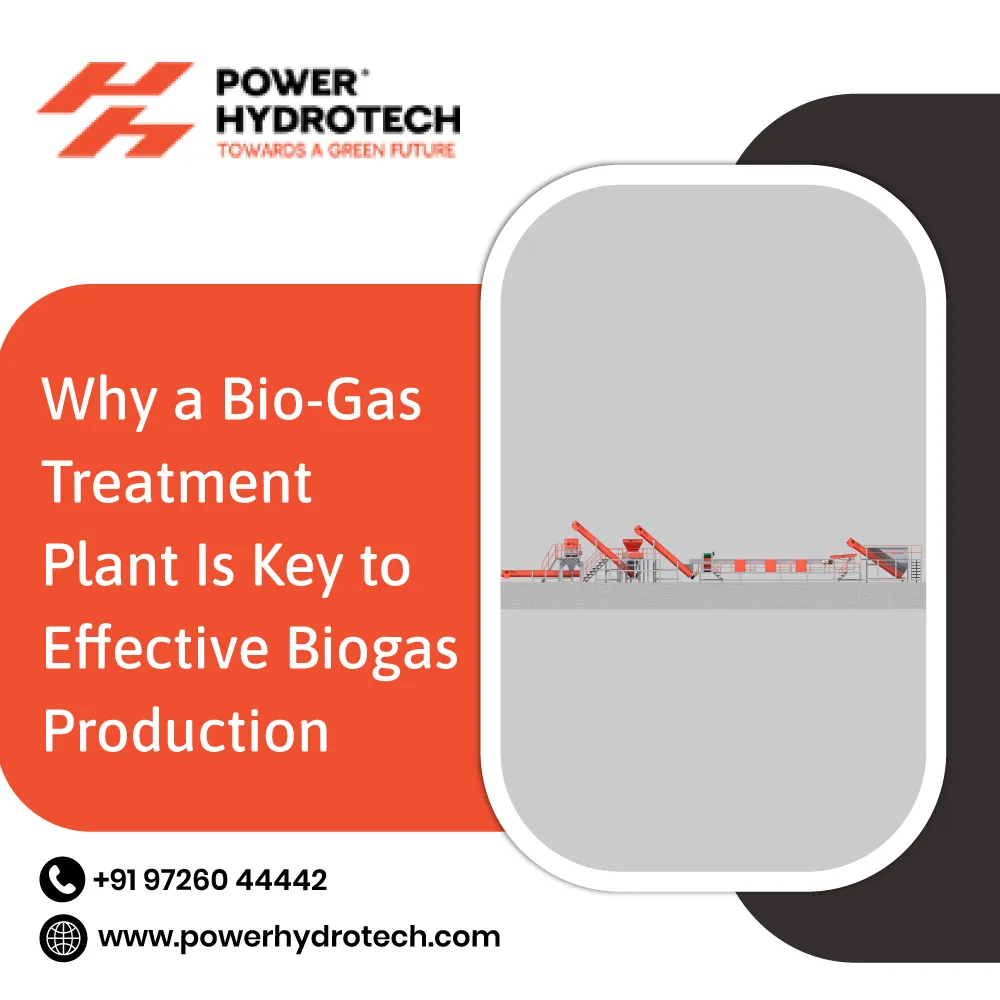
A biogas Treatment plant is the front-end heart of your project. It receives raw organic waste and converts it into clean, prepared feed before it touches the digester. A well-designed biogas Treatment system from Power Hydrotech handles this journey step by step: feeding, manual and magnetic sorting, primary and secondary shredding, and finally slurry preparation.
In this way, biogas Treatment acts like a powerful filter and workshop combined. All hard or harmful items are removed. Biomass is reduced to suitable size. The mix becomes even and easy to pump. When this prepared feed enters the digester, the microbes can work in a more stable and predictable environment.
Across many waste-to-energy and CBG projects, such front-end biomass Treatment for enhancement of biogas production has become a key success factor. Plants that start with a strong Treatment line usually enjoy smoother operations, lower maintenance burden, and stronger confidence in their daily gas output.
Step-by-Step: How a Biogas Treatment System Works
In a typical biogas Treatment system from Power Hydrotech, the process runs in a clear and logical sequence that plant staff can understand and follow every day.
First, the incoming waste is fed into the line through conveyors or loaders. At this stage, operators can visually check the material. Next, the waste passes through manual and magnetic sorting, where staff and magnets remove metal parts, plastic bags, and other non-biodegradable items that would disturb the digester or damage pumps.
After sorting, the material moves into primary shredders. Here, large pieces of organic waste are broken down into smaller fragments. Secondary shredding refines the size even further to reach the level that suits the downstream pumps and digester design. This careful size reduction is a big part of biomass Treatment for enhancement of biogas production, as it opens up more surface area for microbes to attack.
Finally, the shredded material is mixed with liquid to form a smooth slurry. Smart controls and automation, as offered by Power Hydrotech, keep the flow steady and reduce sudden load swings on the digester. Through this full chain, biogas Treatment turns messy raw waste into a steady, digester-ready feed.
How Treatment Boosts Gas Yield and Digester Health
When feed is more uniform and freer from disturbing contaminants, microbes can focus on doing their real job: breaking down organics into biogas. This is the core purpose of biomass Treatment for enhancement of biogas production. By cutting and cleaning the material, the plant unlocks more energy from the same amount of waste.
A good biogas Treatment system also supports digester health. There are fewer chances of dead zones, clogging, or unexpected stoppages caused by foreign matter. Mixer loads become more predictable. Temperature and retention time remain closer to the planned values because the digester is not fighting with large, stubborn chunks.
Over months and years, this stable environment leads to better biogas yield, higher methane content, and more dependable plant performance. Many operators describe a strong biogas Treatment line as “silent protection” for their digesters and gas engines. It quietly guards against many of the common problems that trouble plants built without such front-end treatment.
Protecting Downstream Equipment and Reducing Downtime
Gas engines, boilers, pumps, and separators form the expensive backbone of a biogas plant. When teeth of a shredder break or foreign metal reach a pump, the cost is not only the repair but also the loss of generation during shutdowns. Biogas Treatment plays a key role in cutting these risks.
The biogas Treatment system from Power Hydrotech focuses on strong sorting and controlled shredding before material moves further. Metallic parts are identified and taken out with magnets, and hard items are removed by trained staff at the sorting belt. That way, the chances of shock damage to pumps, valves, and downstream equipment go down sharply.
With better front-end care, the plant faces fewer emergency stoppages and more planned maintenance. This practical form of biomass Treatment for enhancement of biogas production not only increases gas output but also supports calmer, more predictable daily work for the plant team.
Matching Treatment to Different Types of Biomasses
Every project is unique. Some plants work mainly with kitchen waste and hotel scraps, others with cattle dung, food processing waste, or mixed municipal organic fractions. The art of good biogas Treatment lies in matching the process and machines to the exact mix of biomass.
This is where Power Hydrotech brings its experience to the table. As a specialist in waste and recycling technologies, the company studies the feedstock in detail and then shapes the biogas Treatment system around it. For fibrous material, shredding steps might be adapted. For high-plastic municipal streams, sorting areas become more important.
In every case, the goal remains the same: use smart biomass Treatment for enhancement of biogas production so that microbes receive a clean, even, and nutrient-rich feed. When this happens, both small and large projects feel more stable, and plant operators feel more confident about their daily and monthly gas targets.
A Bridge Between Waste Management and Renewable Energy
A modern biogas Treatment system is more than just a mechanical line. It is a bridge between raw waste management and high-value renewable energy production. At the gate of the plant, truckloads of mixed organic waste arrive. At the digester, a smooth, ready-to-digest slurry enters.
In the space between, biogas Treatment transforms the relationship between waste and energy. Polluting, foul-smelling material is converted into a controlled resource. For cities and industries, this transformation is deeply emotional as well as technical. It reflects a shift from dumping to valuing, from landfills to circular flows.
By focusing on biomass Treatment for enhancement of biogas production, projects also support wider goals: cleaner surroundings, climate action, and better public perception. In this sense, every Treatment plant carries not only machines but also a clear message that waste can become power when handled with care.
Why Choose Us
Choosing Power Hydrotech for your biogas Treatment needs means working with a team that understands waste, machines, and real plant life on a daily basis. We study your feedstock, space, and production targets and then design a biogas Treatment system that fits your project instead of forcing a standard layout.
By combining careful sorting, strong shredding, and smart controls, our lines support true biomass Treatment for enhancement of biogas production, helping your digester run smoother and your gas meters climb higher. With our background in recycling technologies and our growing list of biogas projects, Power Hydrotech stands beside you not just as a supplier but as a long-term partner in turning organic waste into stable, reliable green energy.
Conclusion
Effective biogas production does not start inside the digester; it starts at the very first contact between waste and plant. A dedicated biogas Treatment line is the missing link that many projects need to unlock their full potential. With a well-planned biogas Treatment system and focused biomass Treatment for enhancement of biogas production, plants gain cleaner feed, higher gas yield, fewer breakdowns, and a calmer workday for operators.
By choosing a specialised partner like Power Hydrotech, you give your project a strong front-end foundation that supports sustainable, long-term performance and turns organic waste into a dependable source of renewable power.
Key Takeaways
- Many biogas plants underperform not because of digester issues, but because they lack proper biogas Treatment at the front end, leading to mixed, contaminated and uneven feed that reduces gas yield and increases breakdowns.
- A dedicated biogas Treatment system improves feed quality through sorting, shredding and slurry preparation—providing the clean, uniform biomass needed for strong, stable biomass Treatment for enhancement of biogas production.
- Proper Treatment protects digesters and downstream equipment by removing plastics, metals, stones and oversized organic matter, preventing mixer overload, pump clogging and unexpected shutdowns.
- By matching treatment steps to specific biomass types—market waste, hotel waste, food processing residues, cattle dung or municipal organic fractions—plants achieve higher methane output, smoother operations and longer equipment life.
- Power Hydrotech offers practical, field-tested biogas Treatment solutions that act as a bridge between waste management and renewable energy, helping projects unlock reliable gas production and long-term sustainability.
Frequently Asked Questions
What is biogas Treatment and why is it so important?
biogas Treatment is the process of cleaning, sorting, and sizing organic waste before it enters the digester. A good biogas Treatment system removes plastics and metals, cuts biomass to suitable size, and supports biomass Treatment for enhancement of biogas production, which leads to higher gas yield and more stable plant performance.
How does a biogas Treatment system improve gas output?
By removing non-organic material and reducing particle size, a biogas Treatment system gives microbes better access to the organic matter. This kind of biomass Treatment for enhancement of biogas production helps more of the energy stored in the waste convert into biogas, raising daily and monthly gas volumes compared to plants that feed raw, unprepared waste.
What equipment is commonly used in biogas Treatment?
Typical biogas TTreatment linesinclude feeding conveyors, manual sorting stations, magnetic separators, primary and secondary shredders, and slurry preparation units. These elements, arranged correctly in a biogas Treatment system, create effective biomass Treatment for enhancement of biogas production by turning mixed waste into clean, uniform digester feed.
Can Power Hydrotech design Treatment for different kinds of biomass?
Yes. Power Hydrotech studies each project’s feed mix—such as food waste, agro residues, or municipal organic fractions—and then tailors the biogas Treatment system to suit it. This flexible approach to biomass Treatment for enhancement of biogas production helps both small and large plants reach better gas yields and more predictable operation.
How do I get started with a biogas Treatment project?
You can begin by sharing your expected waste type, daily tonnage, and basic plant layout with Power Hydrotech. Based on this information, the team can propose a suitable biogas Treatment layout, explain how the biogas Treatment system will support biomass Treatment for enhancement of biogas production, and guide you step by step towards a practical, long-lasting solution.